GET SCHOOLED ON...
TRANCENDENTALISM
 |
Ralph Waldo Emerson with his son Edward and baby grandson Charles Lowell Emerson.
From Emerson family photograph album, estate of Amelia Forbes Emerson, 1982.
Courtesy of: Concord Free Public Library |
Literary, religious, and philosophical movement originating in New England in the mid-1830s and remaining influential until the 1860s. The philosophy behind transcendentalism was an eclectic mix of English romanticism (especially as mediated by William Wordsworth, Samuel Taylor Coleridge, and Thomas Carlyle), antirationality, antipuritanism, the mysticism of Emanuel Swedenborg, and aspects of Eastern philosophies. The term "TRANSCENDENTALISM," which was actually coined by those who ridiculed the movement for its dreamy abstractions, derives from the German philosopher Immanuel Kant, who wrote of the need to transcend reason alone for a true understanding of reality.
The central beliefs of transcendentalism were in unity between nature and God, the presence of God in each individual, and the potential perfectibility of humans. These core beliefs generated others, particularly in individualism and in the self-reliance extolled by Ralph Waldo Emerson, who wrote that "nothing is at last sacred but the integrity of your own mind." Although transcendentalism was criticized for its supposed otherworldliness, it did have a strong practical element, evident in the formation of the utopian community of Brook Farm, in its anti-institutionalism, and in the dedication of many of its members to social reform.
Writers who were either transcendentalists or closely associated with the movement include: Bronson Alcott, Ralph Waldo Emerson, Margaret Fuller, and Henry David Thoreau. Key transcendentalist works include...NATURE, THE AMERICAN SCHOLAR, THE OVER-SOUL, and SELF-RELIANCE, all by Emerson, as well as WALDEN, by Thoreau. THE DIAL was the journal produced by the group. Writers such as, Edgar Allan Poe, Nathaniel Hawthorne, Herman Melville, and Emily Dickinson, were influenced by transcendentalism even though they were uneasy about it or outright rejected it.
FURTHER READING:
THIS IS THE BEAT GENERATION by James Campbell.
BEAT DOWN TO YOUR SOUL by Ann Charters.
THE BEAT GENERATION WRITERS by A. Robert Lee.
A DIFFERENT BEAT: WRITINGS BY WOMEN OF THE BEAT GENERATION by Richard Peabody.
THE DAYBREAK BOYS by Gregory Stephenson.
EXCERPTED FROM: The Essential Glossary: American Literature by Stephen Matterson. © 2003 Stephen Matterson.

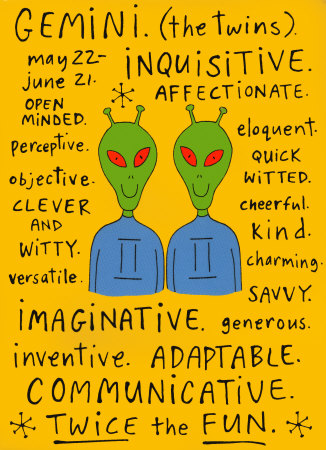 If you know me, then you know I'm in to studying the Occult and all forms of Divination. While I don't rely on horoscopes, numerology, etc. to be 100% accurate or tell me exactly what the future holds, I do, however, use these practices to help me gain insight and direction; and, in addition, I use them as tools to guide self-reflection.

